
Portugal: Year 4

Mid-September, 2025 – Spring, 2026.
The vagabonds return to Portugal in September.
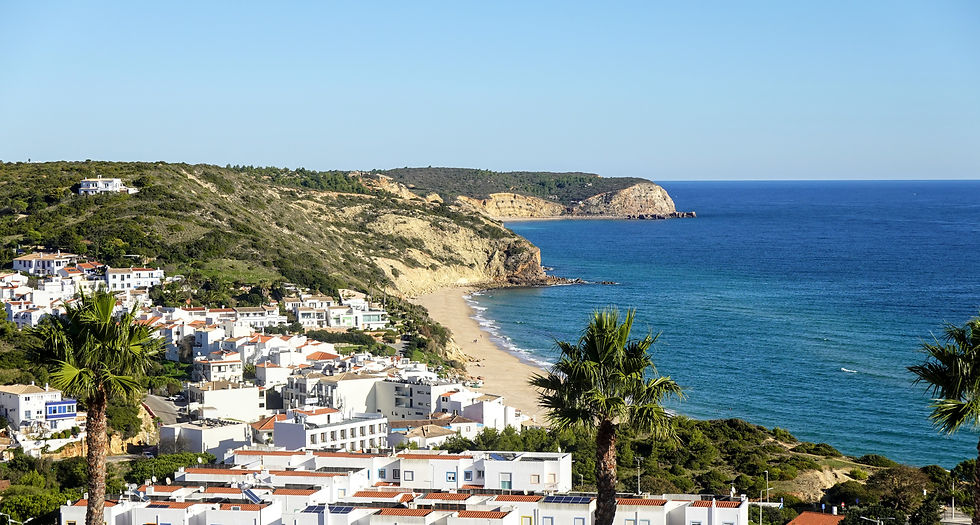
Soon we are back to our regular routines: Saturday morning shopping in Lagos at the farmers market, butcher and fishmonger; golf at Penina; grilling fish at home for dinner; commenting on how fresh and flavorful the food is here. The weather is sunny and warm.
Friends, Neighbors and Family We are glad to reconnect with the people whom we’ve met, and to expand our contacts to additional, new friends.
Rick visits his eccentric barber Eduardo for whom he brought back an original Ford oil can (with logo) from the 1920’s. Eduardo is excited to add it to his shop’s menagerie of items.
Through golf, we meet visitors from Ireland, England, Sweden, and the Netherlands among other European spots. And we play regularly with our friends from Germany who live part time here; they are the most international couple we know: both had fathers who worked for much of their careers in other countries, and they continued the tradition living most of their lives in Peru, Brazil, Switzerland, Pakistan, Russia, Korea, and Germany. They also vacationed in many spots in the United States. In addition to golf we have several dinners with them in our respective homes including a Brazilian BBQ at theirs which includes their Italian neighbors.
We have drinks and/or dinner with various neighbors from Wales, Switzerland and Australia.
Mary joins a walking group organized by John, a man from South Africa who sets up walks a couple times per week to different local venues. Through this group we meet Nancy who lives just down the hill from us in Salema. She is from Minneapolis but has lived here for six years.
We also reacquaint with Azra, a woman originally from the Netherlands who moved to Salema some 15 years ago and often walks dogs for friends in the village.
Mary attends a week-long yoga retreat in the next village. It is at an old farmhouse down a dirt road on the outskirts of town and has the appearance of a hippy commune.
Our nephew and niece from London visit us for a week. Leisurely time is spent over games of Rummycube, wine and good dinners. A couple of months later they return. In the evenings we play a new board game they brought with along, Star Wars: The Clone Wars. Then we make dinner and have some really good wines.

At Thanksgiving, our children from Boston arrive! We enjoy the time together with lovely dinners of grilled fish, special monkfish with sauce, and paella at home. There are also many card games centered on sets that the kids can play like Uno and Capture the Queen. We tour the castle in nearby Silves and the German bier garten in Porches, and each evening the kids play on the beach at sunset.

Mid-week we take a road trip to Sevilla, Spain. It is a three hour drive but we rent a vehicle big enough for six so that we can travel together. In Sevilla, we find an apartment with enough room where we can all stay together. We visit the cathedral, the third largest in Europe, which it doesn’t appear to be massive since it is built on the square footprint of a thousand-year-old Moorish mosque. The kids enjoy climbing up through the huge bell tower for a grand view of the city. Next, we visit the Alcazar palace, the oldest royal palace still in use in Europe. It has a very large, lovely garden as well.

And we walk to see the Plaza de Espana, built as the site of the Ibero-American Exhibition in 1929.
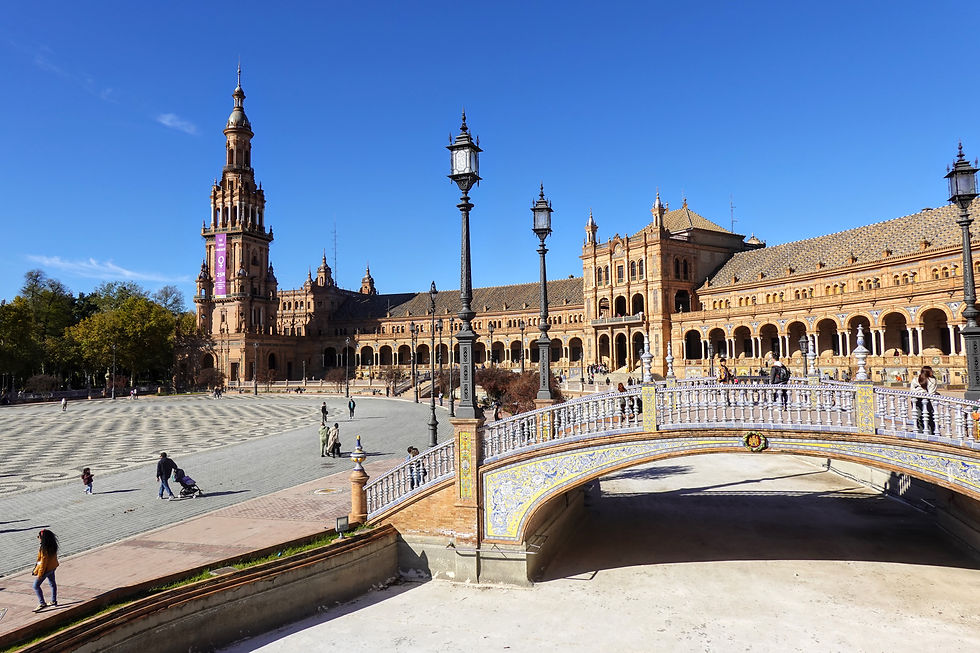
To our delight, there are talented flamenco dancers in the square dancing for donations.

Hungry, the kids search out the best churros in town.
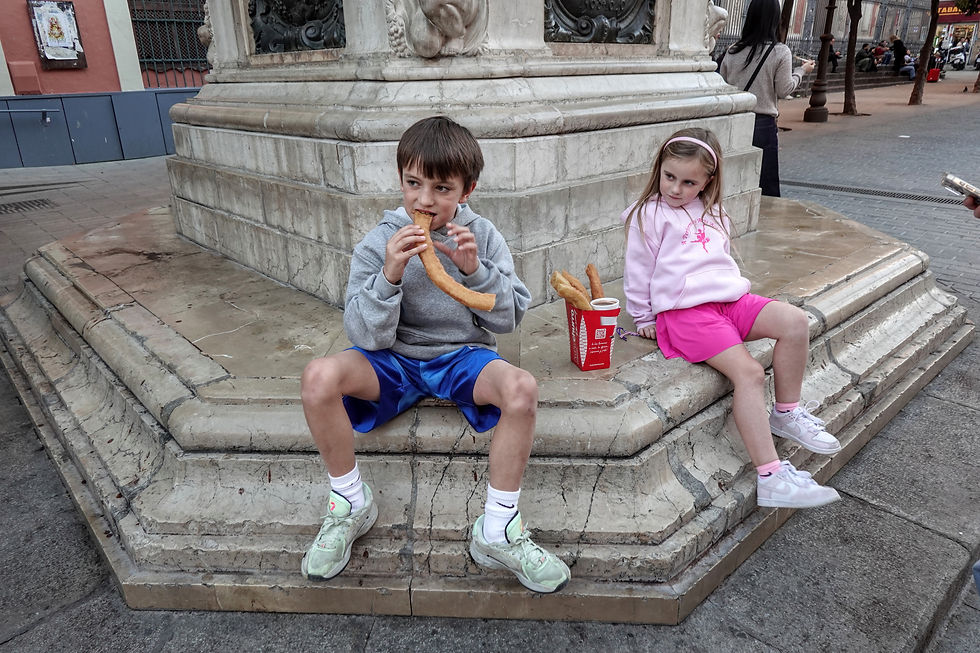
That night we walk to the northern section of the city to a tapas restaurant.

Alas, the week goes too quickly, and early Saturday morning the party-van heads east back to Faro airport for the flight back to Boston.

The rainy season begins in November. There was occasional and needed rain in October which made the golf course green, but then in November the rainy season begins with many more rainy and windy days, especially because there is a huge storm in the Atlantic. By the later part of the month the weather relents to a more normal, calm and (during the day) warm season. But in December the rain returns (but with less wind most days). The news reports that 2025 is the wettest year since 2014 with 25% more rainfall than normal.
Christmas Season
There are lots of Christmas musical events in the Algarve in December. Many are later in the evening than we prefer to be out, but we do find a few to attend:
The first is a lovely woodwind ensemble concert at the local Church in Budens (great acoustics in the old stone building) featuring a french horn, clarinet, oboe, bassoon, and flute.
A week later we attend a trio of piano, clarinet, and soprano vocalist playing operatic selections from Schubert and others at the Church in Luz. It was equally thrilling.

Two evenings before Christmas there is a jazz / swing concert at the Lagos Cultural Center. It features a big band of 16 musicians playing hits from Benny Goodman, Glenn Miller, and others from the 1940’s swing era. It is really good.

On the 9th day of Christmas we return to the Lagos Cultural Center to hear the El Quinteto Furioso ensemble playing music of Astor Piazzolla, a combination of classical, jazz, and tango. The group consists of piano, bass, violin, button accordion, and rhythm guitar. This unusual combination of instruments was amazing. The bass player was particularly interesting: a wide smile, unruly hair, slightly rumpled clothes, playing bass melody (not just background), and at times almost dancing with his instrument.
At our regular Saturday market trip to Lagos we encounter a walking group of “elves” playing Christmas carols, juggling, and making balloon animals for the passersby.

Our neighbors join us for Christmas Eve dinner. We join them to celebrate New Years Eve and watch the dazzling fireworks on Salema beach. From the patio we can also see the fireworks in Burgau, Luz, Lagos and Budens.
Just in time for the holidays we find a distributor for a winery we visited last May in Barriad: Caves Sao Joao. It has been in business for a hundred years. However, no local wine shop that we have checked out carries it, and when we ask shops to try to order it we come up dry. Finally, we are able to get the name of a local distributor from the winery, Catuna and Silva, which is located in a concrete block garage-like structure on the outskirts of a nearby town. It did not appear to have a retail operation. But, since we were there, we entered and found an office room with a woman who spoke only Portuguese. Soon, though, she found another worker who spoke some English and seemed interested in helping us find some Cave Sao Joao. It turns out that they stock a nice selection of over 25 bottlings at prices similar to the winery, which is very reasonable. We pick out a couple cases of different wines to take with us.
As winter arrives the monsoon continues. It rains nearly every day, usually several times per day for an hour or so, then stops for a while when often the sun emerges, then the rain returns. February is the rainiest month in the Algarve in 47 years, although the temperature stays in the 50’s. The Penina golf course has much standing water; the fairways are muddy. We play when we can but have to cancel a lot of rounds due to the inclement weather. We even get standing water on our patio deck as the water clogs the drains.
We use the time to navigate more Portuguese administrivia, including trying to renew our residency, obtain Portuguese drivers licenses and complying with trivial information requests from our bank. Most of these initiatives are only partly successful because we don’t yet have the necessary permits from the Portuguese immigration agency.
Finally though, after a 34 month wait, our attorney informs us that we have been granted an appointment with the immigration agency. But it is in Lisbon. We discover that the bus is the most convenient transportation to the capital city – a three hour ride plus one coffee stop enroute. The agency office is in a low-end, crowded, uncomfortable government building. There are dozens of people waiting for service. We arrive early but have to stand outside until our appointed time. Then we hear that the agency computer system is down so they are canceling all remaining appointments for the day! Is this government incompetence or a plan to make the experience so frustrating that immigrants give up on Portugal?
Two weeks later our attorney obtains another appointment for us. We return to Lisbon; the agency gives no options for when, where, or what time the appointments occur so we have to cancel other scheduled appointments. When we get through the line we are told that we don’t have an appointment for that day and are sent to another queue. After some time, our attorney straightens out the misunderstanding and we are seen. The clerk takes copies of various documents, we sign some papers, have our fingerprints and photo taken, then pays a large processing fee. No one knows how long the processing will take. . .
We join a local support group for expats where we meet some more people and arrange to tour one of the only remaining sardine canning factories left in the Algarve, Conserveira do Arade. Until a few decades ago there were a couple dozen sardine factories in the Algarve. All of them closed. Then a decade ago a French fellow started this company as a small-volume artisan endeavor. They produce tins of fish (e.g. sardines, mackerels, horse-mackerels, cod, octopus) in olive oil with various spices added to different selections (e.g. lemon, mango, tomato, chili pepper) and jars of shredded fish with various sauces that are good with pasta. Some are also smoked. Our tour takes through the labor-intensive process of preparing the individual fish, brining them, canning, adding the olive oil, sterilizing in an autoclave, and packaging. Then we taste some of the products, and of course, buy some. It is an interesting visit.

We also plan our trip to Italy for the summer. In mid-February the weather breaks and the constant winter rains stop. But in mid-March the rains returns through mid-April.
Good news occurs: after more than 2 years of effort and waiting, we find a company to come out and replace the flue pipe on the wood-burner. The repairman is very skilled. He tells us the original pipe only extended a few feet above the ceiling with just a hole to take the smoke up through the chimney. The new pipe extends all the way to the chimney and is lined with a flexible stainless steel pipe all the way to the top of the chimney. It is too warm now to test the repair; we will be eager to try it out when fall arrives.


Comments